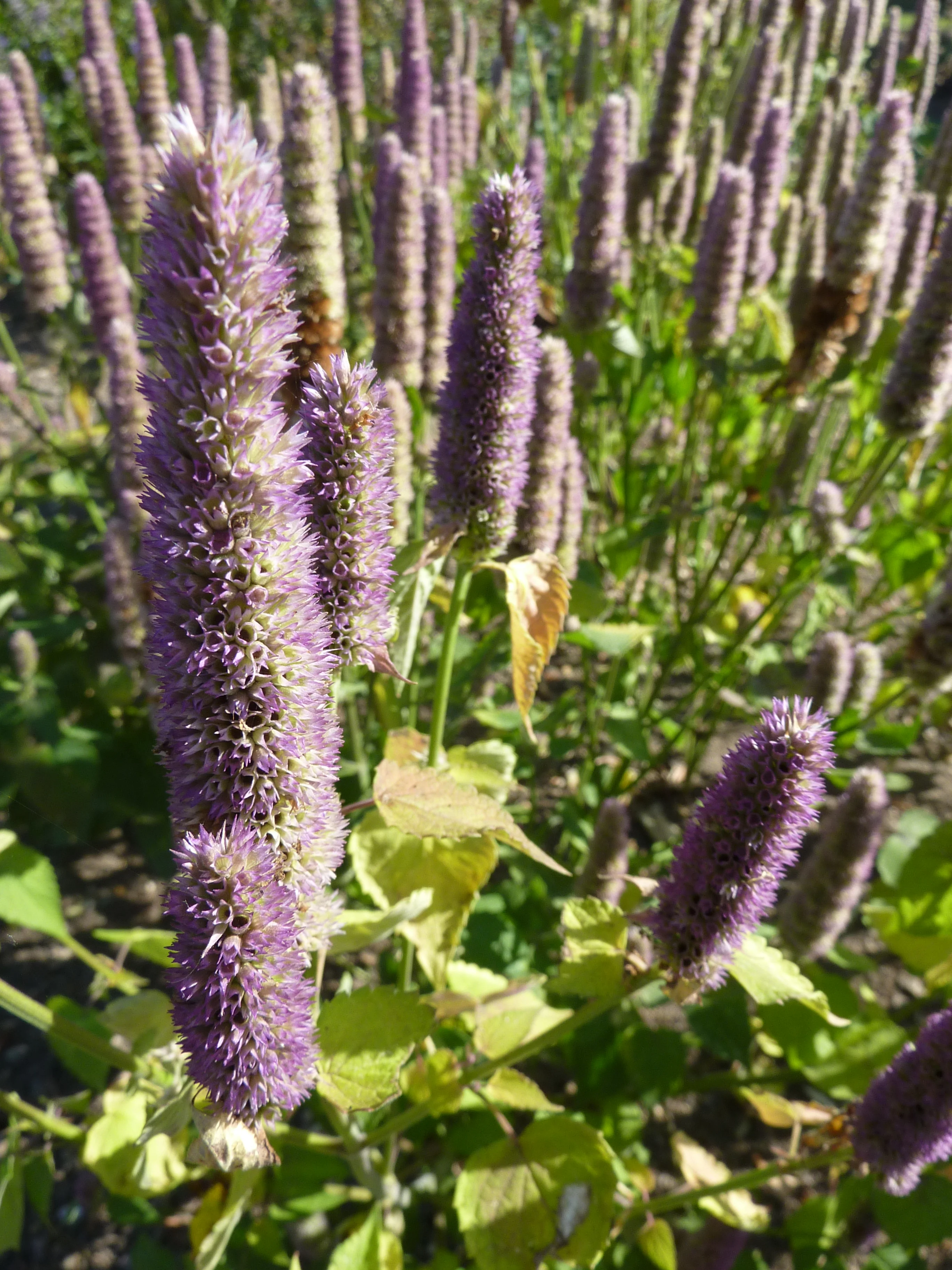
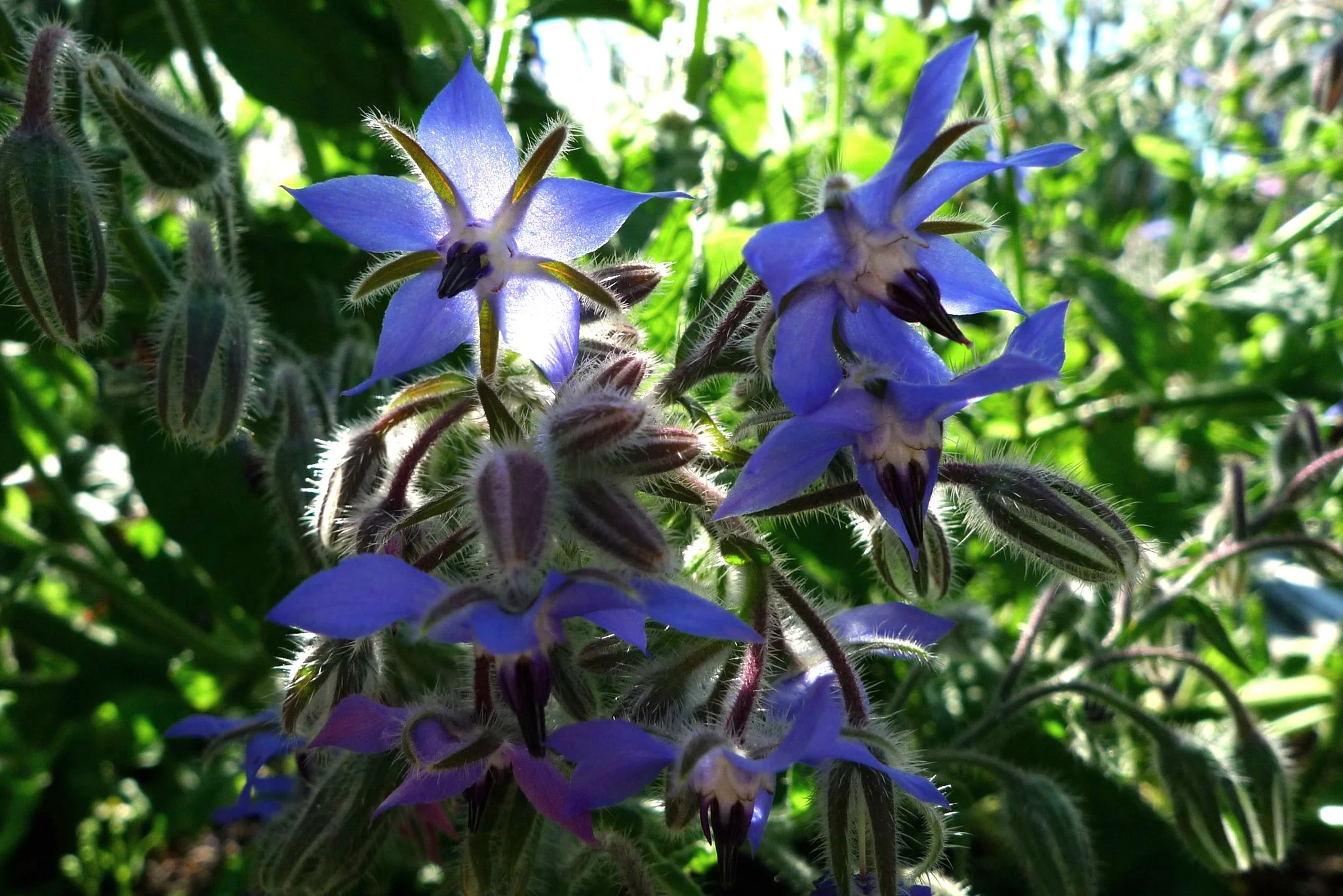
Photo: "Agastache foeniculum" by Magnus Manske
· CC BY-SA 3.0
Anise hyssop leaves and flowers
Perennial · Lamiaceae
Anise hyssop is a perennial edible flower and herb with a sweet anise-licorice aroma in both leaves and blooms. It is highly attractive to pollinators, easy to grow from seed, and useful in teas, garnish, and herb blends. It suits gardeners who want a long-blooming perennial that feeds bees and also contributes flavor to the kitchen. Key facts: 75–90 days to maturity from direct sowing, 6+ hours of sun, 6–12" spacing. Container-friendly (minimum 2-gallon pot).
Updated June 1, 2026·Backed by 2 cited sources
Overview
At a Glance
The essentials first: timing, light, spacing, seed-starting, container fit, and overall size.
Days to maturity
75–90 days
from direct sowing
Sun
6+ hours
Full Sun To Light Afternoon Shade
Spacing
6–12"
between plants
In practice
Dense sowing is fine for cover crop function; thin more aggressively if growing for edible flowers.
Seed start
0 weeks
before transplant
Container
Yes
2+ gallon pot
Height
0.5–3 ft
at maturity
Planting window
Zone Planting Guide
Switch zones to see whether this plant is a strong fit, what frost timing looks like, and any extra notes worth planning around.
This card updates instantly with viability, frost timing, and any planting notes for your selected zone.
Care
Growing Guide
Everything in one place: seed starting, transplant timing, watering, soil, and structural support.
Seed starting
Germination
Time5–14 days
Optimal temperature72°F
Seed depth0.25"
Moisture
Watering
Weekly0.75–1.25"
NeedsModerate
Base watering
Root zone
Soil
pH range6–7
PreferredAverage To Moderately Fertile, Well Drained Soil; Most Of These Crops Do Not Need Rich Feeding.
Every answer is assembled from this cultivar's own record, so the figures match the rest of the page.
How many days to maturity for Anise hyssop leaves and flowers?
Anise Hyssop takes 75–90 days to reach maturity from direct sowing.
How far apart should you plant Anise hyssop leaves and flowers?
Space Anise Hyssop 6–12 inches apart, with 12–18 inches between rows.
How much sun do Anise hyssop leaves and flowers need?
Anise Hyssop needs at least 6 hours of direct sun a day.
How much water do Anise hyssop leaves and flowers need?
Anise Hyssop needs 0.75–1.25 inches of water a week, counting rainfall.
What soil pH do Anise hyssop leaves and flowers need?
Anise Hyssop grows best in soil with a pH of 6–7, ideally around 6.5.
How tall do Anise hyssop leaves and flowers get?
Anise Hyssop reaches 0.5–3 feet at maturity.
How do you start Anise hyssop leaves and flowers from seed?
Sow seed straight into the garden once the soil reaches 55°F.
What temperature do Anise hyssop leaves and flowers seeds need to germinate?
Anise Hyssop seeds germinate best at 72°F, within a workable range of 65–80°F, and take 5–14 days to emerge.
Can you grow Anise hyssop leaves and flowers in containers?
Yes, Anise Hyssop grows well in containers. Use a pot of at least 2 gallons; 5 gallons is better.
When is Anise hyssop leaves and flowers in season?
Anise Hyssop is a warm-season crop, in season from mid-summer through fall in most regions. Plants reach harvest 75–90 days after direct sowing and keep producing until the first fall frost.
Resilience
Plant Health
Stress tolerance, resistance notes, and the most common problems to watch for as plants mature.
Tolerance
Heat: ModerateCold: Semi-hardyDrought: Moderate
Needs a real winter. This plant requires months of cold dormancy each year and declines without it, so it is not a practical crop in frost-free climates.
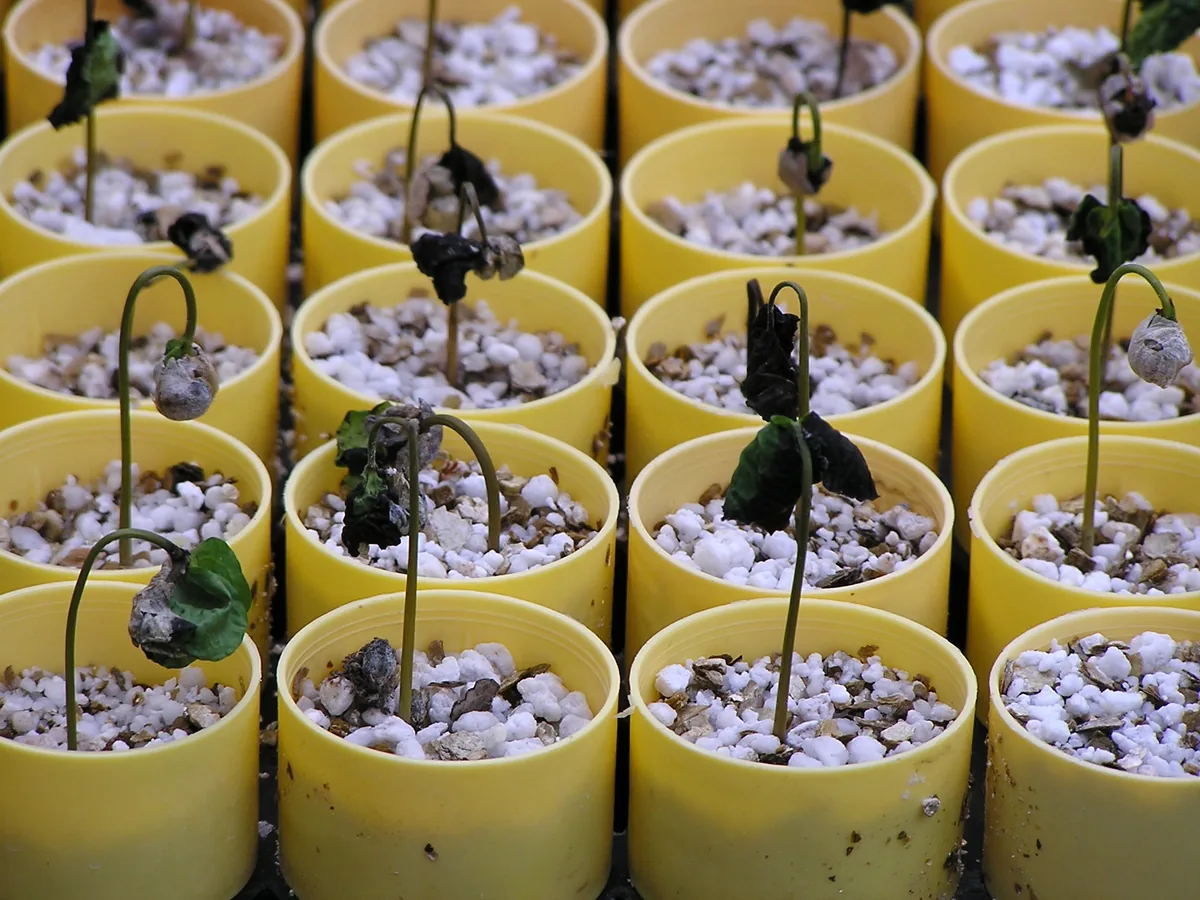
A seedling killer caused by several different fungi working together. It hits vegetables, flowers, herbs, microgreens, and cover-crop seedlings the same way — seeds rot before they emerge, or young seedlings collapse right at the soil line. Wet seed-starting mix and poor airflow in seedling trays are the classic conditions.
Triggers: Wet soil or starting mix, poor drainage, seedlings packed too tightly, contaminated trays or media, and stagnant air all favor damping-off.
On Anise Hyssop: Cold, wet seedbeds or overly dense sowing can kill seedlings.
Prevention: Use clean seed, shallow sowing, and thin dense stands.
Risk fades when: Drying the soil surface and improving airflow slows new spread. Collapsed seedlings don't recover, but the rest of the tray can be saved.
Damping off of coffee seedlings caused by Fusarium sp. — Photo:
Scot Nelson
·
CC0 1.0
Root rotPythium spp. / Phytophthora capsici
High
Disease
May–AugPeak window months: May, Jun, Jul, Aug.
A water mold (not a true fungus) that attacks roots and crowns in waterlogged soil. It's most dangerous in heavy, poorly drained soil after extended rain — basically any time water sits around plant roots for days.
Triggers: Pythium infects from 50-95°F as long as the soil stays saturated. Phytophthora capsici is most active at 75-85°F. What matters most is how long the soil stays waterlogged, not just whether it rained.
Risk fades when: Risk fades when soil returns to field capacity (normal drained moisture). How long that takes depends on your soil — sand drains in hours, clay can take days.
May, Jun, Sep, OctPeak window months: May, Jun, Sep, Oct.
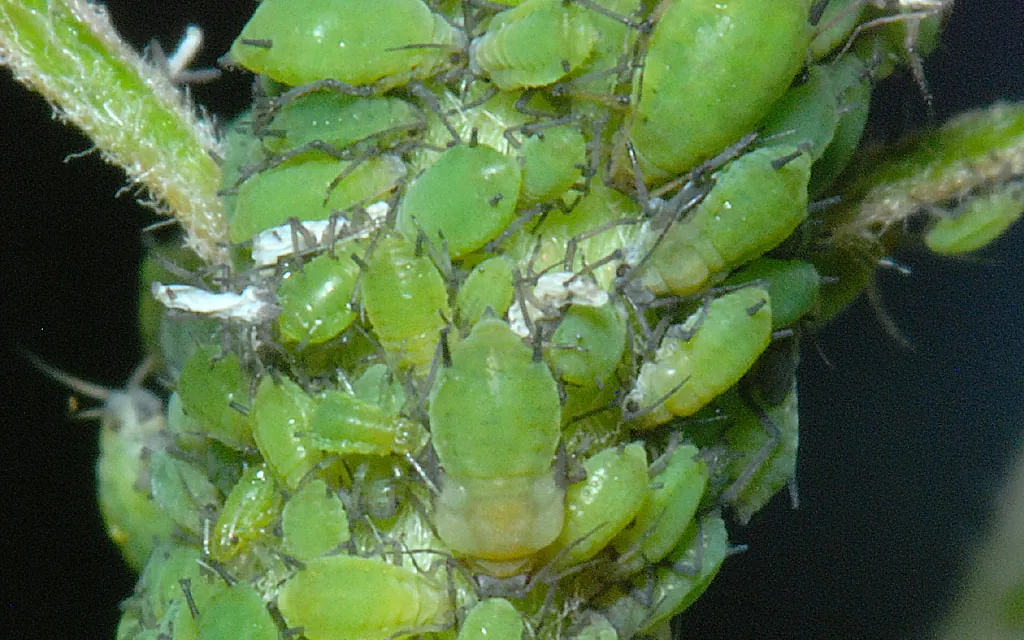
Aphids are soft-bodied sap-sucking insects that cluster on tender new growth. Most established plants tolerate moderate populations and will outgrow damage on their own, but aphids are the most important plant virus vectors in the garden, transmitting more than 100 plant viruses including potato leafroll, cucumber mosaic, and turnip mosaic. Honeydew excreted while feeding supports sooty mold growth and attracts ants that protect aphids from natural enemies.
Triggers: Optimal development at ~75°F (green peach aphid) per UC IPM Floriculture; melon aphid develops fastest above 75°F. Many species heat-intolerant above 90°F and crash in mid-summer. Soft new growth and over-fertilization with high N favor population buildup. Females give live birth parthenogenetically most of growing season — one generation in ~1 week under optimal conditions.
Risk fades when: Per UC IPM and Clemson HGIC, populations crash in mid-summer heat (>90°F) for many species, return in cooler conditions
Aphis pomi (green apple aphid) colony on crab apple stem (resized, converted to WebP) — Photo:
InfluentialPoints
·
CC BY 3.0
Bird damageMultiple species: American robin (Turdus migratorius), European starling (Sturnus vulgaris), red-winged blackbird (Agelaius phoeniceus), cedar waxwing (Bombycilla cedrorum), house sparrow
Moderate
Pest
Jun–AugPeak window months: Jun, Jul, Aug.
Birds cause significant damage to ripening fruit (berries, grapes, figs, cherries), to newly-planted seeds, and to seedlings. Damage peaks during fruit ripening on berries and during seed-head ripening on sunflowers. Robins feed low on bushes; starlings feed in upper canopy; species and feeding patterns vary widely. Even partial damage opens entry points for diseases and insects.
Triggers: Damage seasonal — peak during fruit ripening (June-August in north). Dry years intensify damage as birds use fruit for water. Proximity to forest edges or harvested grain fields amplifies pressure.
Risk fades when: Risk is tied to each crop's ripening window - berries in June through August, corn at silking, sunflower at seed-head fill - so pressure fades once the vulnerable fruit or grain is harvested; netting or row cover during that specific window is the main protection (Oregon State Extension, EM 9286).
Downy mildew (flowers)Peronospora and Plasmopara species
Moderate
Disease
Apr, May, Jun, Sep, OctPeak window months: Apr, May, Jun, Sep, Oct.
A group of cool-weather water molds that attack many ornamentals, including snapdragons, sunflowers, and impatiens-type bedding plants. It shows as pale or yellow patches on the upper leaf surface with a downy gray-to-purple growth on the underside, and young plants can collapse. It needs cool temperatures, high humidity, and leaf wetness.
Triggers: Favored by cool temperatures (about 50-70°F), humidity of 90% or higher, and free moisture on the leaves. Distinct from powdery mildew, which prefers dry leaves.
Risk fades when: Warm, dry weather suppresses it. Three dry days with highs above 75°F exits the active window; infected leaves stay damaged.
FloppingFlopping happens when stem strength can't support the plant's mass — usually because the plant grew too fast, didn't get enough sun to build strong stems, or got too much nitrogen which pushes soft leafy growth at the…
Moderate
Physiological
Jun–SepPeak window months: Jun, Jul, Aug, Sep.
Flopping happens when stem strength can't support the plant's mass — usually because the plant grew too fast, didn't get enough sun to build strong stems, or got too much nitrogen which pushes soft leafy growth at the expense of structural strength. Rain and wind compound the problem by weighing down soft tissue. Some plants are inherently floppy — peony, dahlia, delphinium, large mum, tall sunflower — and need staking from the start. Others normally hold themselves up but flop when grown in shade or overfed. Stake early (in spring before plants have grown into their support) rather than late (when stems are already bent and a stake just preserves the deformity). Pruning or pinching tall plants when young encourages branching and reduces flop risk.
Triggers: Per MSU Extension: full sun produces sturdy self-supporting plants; shade or over-fertilization produces soft top-heavy growth. Rain and wind accelerate flop. Plants with naturally heavy blooms (peony, dahlia, large lily, hollyhock) need staking from start.
Risk fades when: Stake early in spring before too much growth. Late staking just preserves the bend. Pinch tall plants when young to encourage branching. Reduce nitrogen feeding if plants are floppy and overgrown.
Gray moldBotrytis cinerea
Moderate
Disease
May–SepPeak window months: May, Jun, Jul, Aug, Sep.
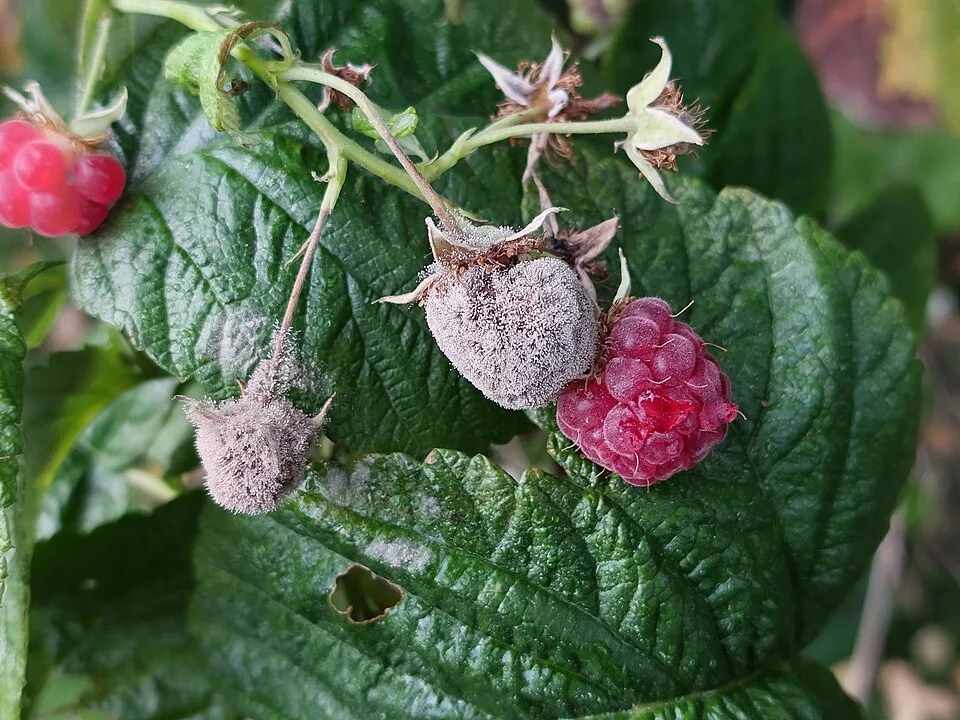
Fuzzy gray mold on flowers, fruit, and wounded tissue. It thrives in cool, humid, enclosed spaces — University of Minnesota notes this is unlikely to be a problem in open home gardens and rare even in field tomatoes. It's mostly a greenhouse and high-tunnel concern, included here because SoilStack supports those growing environments.
Triggers: Develops at 60-75°F with humidity above 80%. Infection requires 4-6 hours of standing water on the plant tissue. UMN's data shows it's unlikely in open home gardens.
Risk fades when: Temperatures above 82°F suppress growth and spore production. That's the published threshold.
Raspberry fruit with gray mold (Botrytis cinerea) infestation (resized, converted to WebP) — Photo:
Schlaghecken Josef
·
CC BY 4.0
Japanese beetlePopillia japonica
Moderate
Pest
Jun–AugPeak window months: Jun, Jul, Aug.
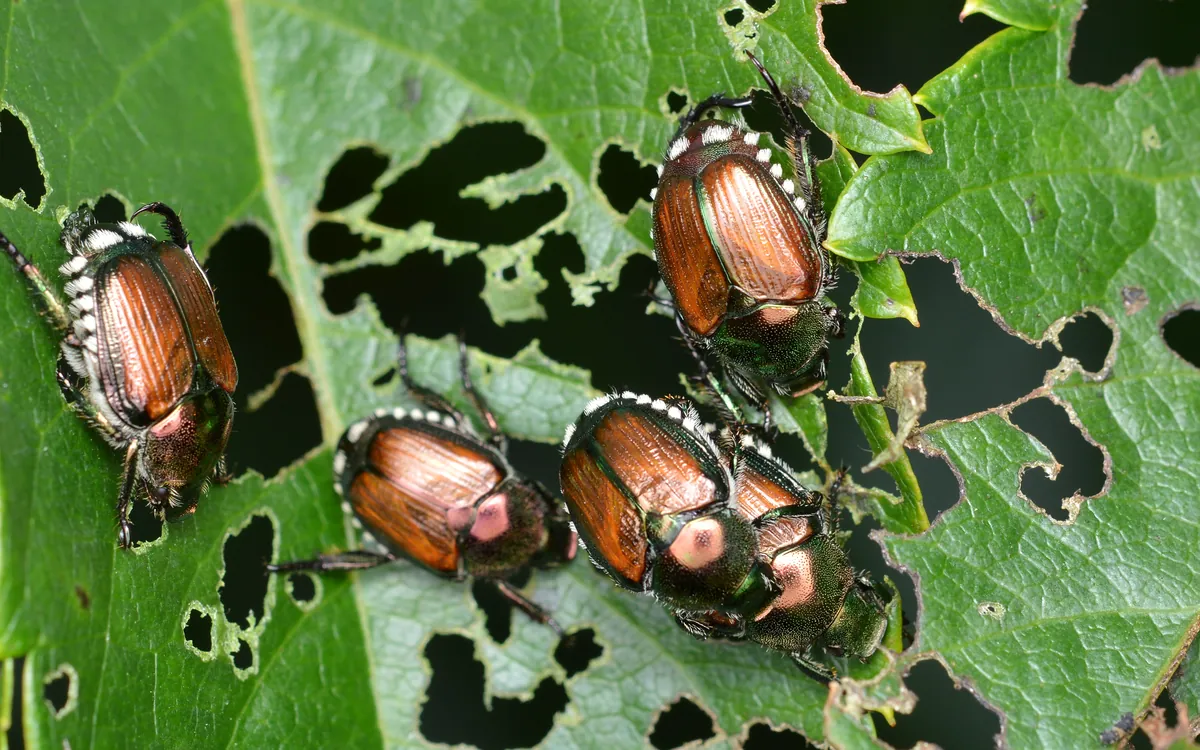
Japanese beetle adults feed gregariously on the foliage and flowers of more than 300 host species, skeletonizing leaves by chewing tissue between the veins. Larvae (white C-shaped grubs) damage turf and root systems. Adults are active during the warmest part of sunny summer days, when populations can rapidly defoliate roses, grapes, and ornamentals. Do not use Japanese beetle traps near plants — the lures attract more beetles than they catch.
Triggers: One generation per year. Overwinters as larva in soil. Adults emerge late June-early July (peak July). Adults active during warmest part of sunny days. Females lay 40-60 eggs in turf 3 inches deep.
Risk fades when: One generation per year: adult emergence peaks around early August and tapers to the last beetle by about September 1, so above-ground feeding pressure ends in early fall as the adults die off and grubs move underground (UMass Extension, UMN Extension).
Japanese beetles (Popillia japonica) on a skeletonized leaf (resized, converted to WebP) — Photo:
Ryan Hodnett
·
CC BY-SA 4.0
A mint-family powdery mildew that produces white to gray powdery growth on mints, sages, oregano, marjoram, catnip, catmint, anise-hyssop, and shiso. Not the cucurbit or legume model — these are mint-family-specific pathogens. They favor humid canopies, crowding, and poor air movement.
Triggers: High humidity, dense herb canopies, poor airflow, shade, and dry leaf surfaces with humid air all favor infection. Rain isn't required and may even suppress spores temporarily.
On Anise Hyssop: Late-season humidity can coat foliage and blooms.
Prevention: Improve airflow and avoid crowding.
Risk fades when: Pressure eases when conditions move outside the warm, humid-canopy zone the pathogen prefers.
Rust (flowers)Puccinia and Coleosporium species
Moderate
Disease
May–AugPeak window months: May, Jun, Jul, Aug.
Rust fungi that infect many ornamentals, including sunflowers, asters, and other annuals. They produce powdery orange, yellow, or brown pustules, usually on the undersides of leaves, with yellow flecking on the upper surface. Heavy infection yellows and drops leaves and weakens the plant. Rust is favored by humidity and leaf wetness.
Triggers: Favored by humidity and extended leaf wetness. Pustules on leaf undersides release powdery spores that spread on wind and splashing water; many rusts overwinter in debris.
Risk fades when: Hot or dry weather slows rust. Two days above 85°F or three dry days exits the active window; existing pustules remain.
Apr, May, Sep, OctPeak window months: Apr, May, Sep, Oct.
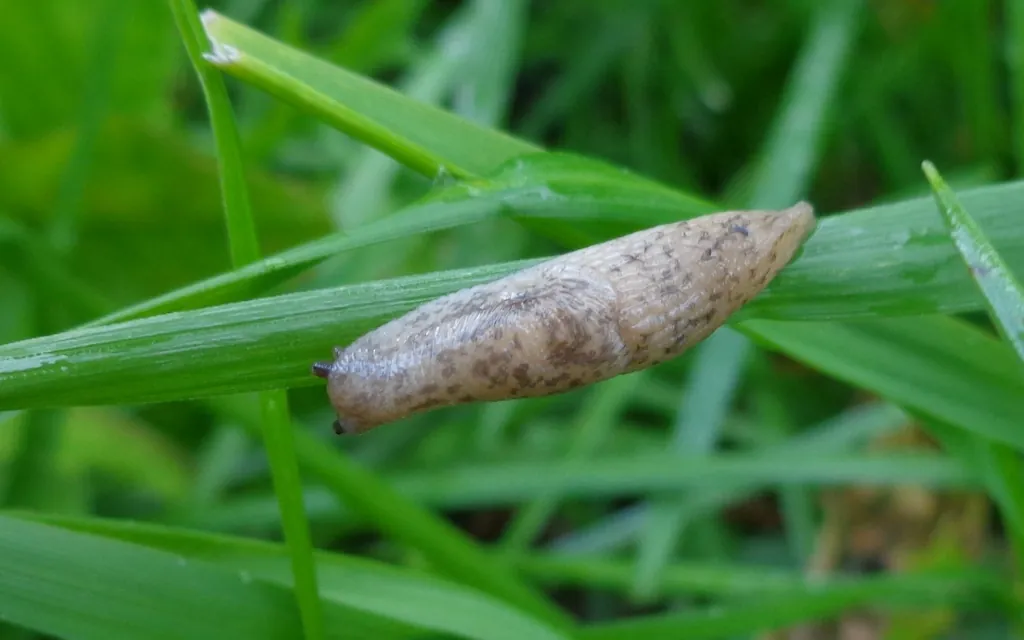
Slugs and snails are nocturnal mollusks that chew irregular holes in leaves and clip off succulent seedlings. They leave characteristic silvery slime trails. Hermaphroditic and prolific, brown garden snails lay around 80 eggs per month for up to six clutches per year.
Triggers: Active at night and early morning in damp conditions. Coastal CA and southeast — active year-round. Spring rains and dense ground cover (mulch, debris, weeds) create harborage.
Risk fades when: Hot, dry summer weather drives slugs and snails into inactivity, so risk drops sharply once conditions turn warm and dry; populations are highest in cool, wet spring and fall, and in mild-winter coastal regions they can stay active year-round (UMN Extension, Penn State, UC IPM).
Gray garden slug (Deroceras reticulatum) on foliage (resized, converted to WebP) — Photo:
AfroBrazilian
·
CC BY-SA 3.0
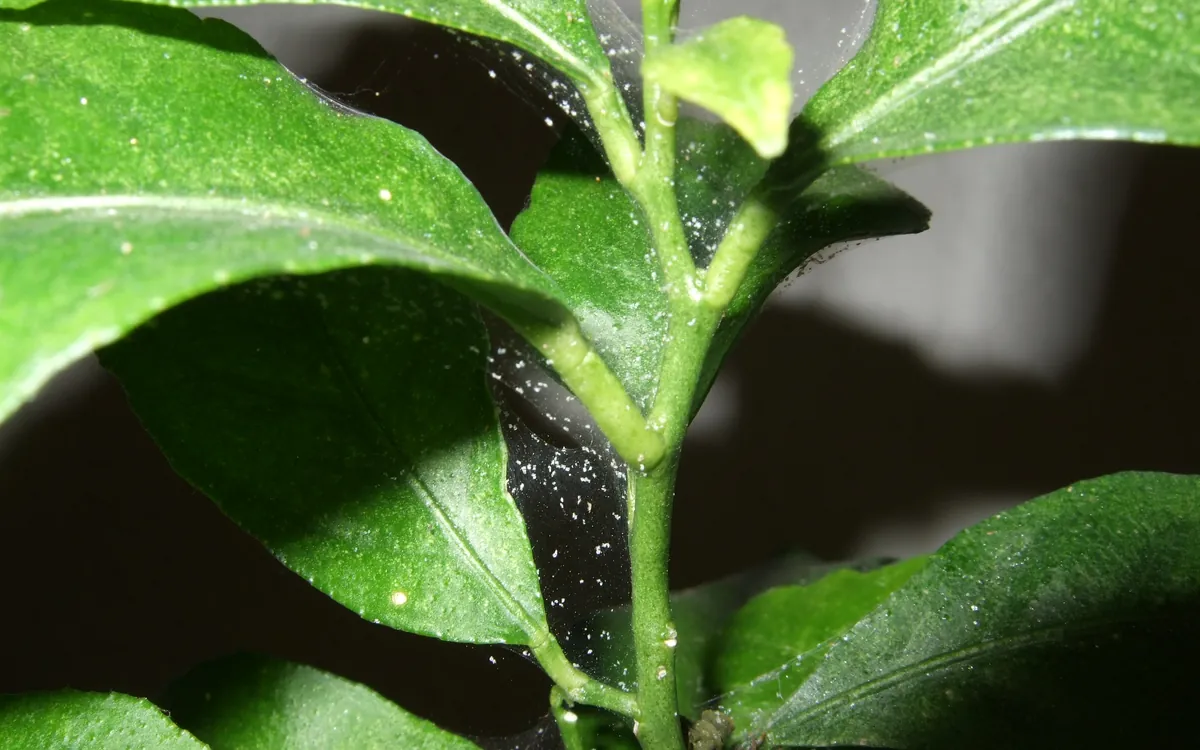
Spider mitesTetranychus urticae (two-spotted spider mite, most common); also broad mite (Polyphagotarsonemus latus), russet mite (Eriophyidae)
Moderate
Pest
Jul–AugPeak window months: Jul, Aug.
Spider mites are tiny arachnids (1/50 inch) that feed on the undersides of leaves, producing characteristic silver-yellow stippling. Heavy populations produce visible webbing that interferes with pesticide coverage. They thrive in hot dry weather and drought-stressed plants. The two-spotted spider mite feeds on more than 180 cultivated plant species.
Triggers: Hot dry conditions; >90°F lifecycle <2 weeks. Drought stress amplifies. Broad-spectrum sprays (carbaryl, pyrethroids) trigger outbreaks by killing predators. Wisconsin Ext: 'as little as a month without significant rain during the growing season can favor a mite outbreak.'
Risk fades when: Populations build in hot, dry weather and then crash in late summer and fall as predatory mites catch up, host foliage declines, and cooler, wetter weather and rain set in, so risk fades once the heat and drought break (UC IPM, Colorado State Extension).
Spider mite (Tetranychidae) infestation with webbing on a young lemon plant (resized, converted to WebP) — Photo:
Paramecium
·
CC BY-SA 3.0
ThripsFrankliniella occidentalis (western flower thrips), F. tritici (eastern flower thrips), F. fusca (tobacco thrips), Thrips tabaci (onion thrips)
Moderate
Pest
Mar–MayPeak window months: Mar, Apr, May.
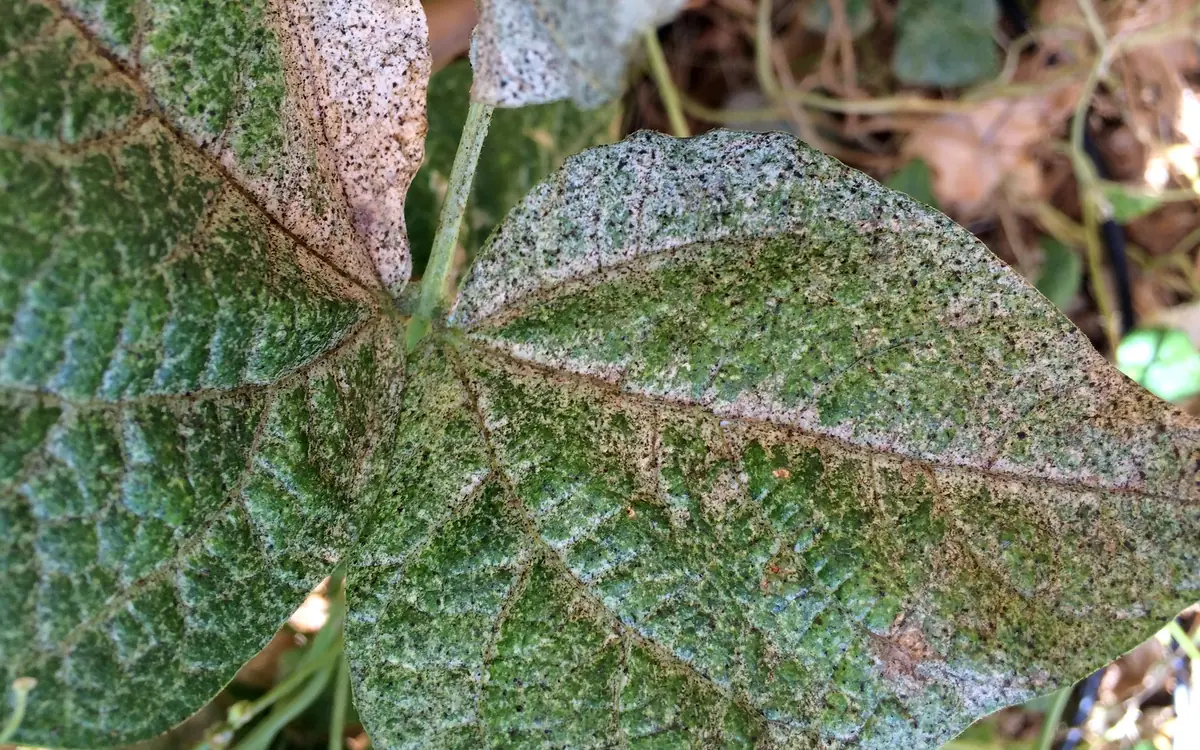
Thrips are tiny (1/16 inch) slender insects with fringed wings that puncture and rasp leaf surfaces, leaving silver stippling with black frass dots. The biggest concern is virus vectoring: western flower thrips is the principal vector of tomato spotted wilt virus (TSWV) and impatiens necrotic spot virus (INSV), which affect more than 600 plant species. Greenhouse and high tunnel infestations can be devastating.
Triggers: Hot dry weather; greenhouse/high tunnel environments. Female lays eggs inside leaf tissue. 2 larval stages feed; 2 non-feeding pupal stages in soil/litter. Lifecycle 10-21 days. Many overlapping generations. Bridge crops (spring wheat, peach, strawberry per NC State) build populations before vegetable hosts available.
Risk fades when: Infestations are worst in hot, dry weather; cool conditions slow development and heavy rain or overhead irrigation knocks populations down sharply, so risk fades as the weather turns cool and wet and rebuilds the following spring (UK Entomology, Cornell IPM).
Thrips feeding injury on pole bean leaves — silvery stippling with dark fecal specks — Photo:
Scot Nelson
·
CC0 1.0
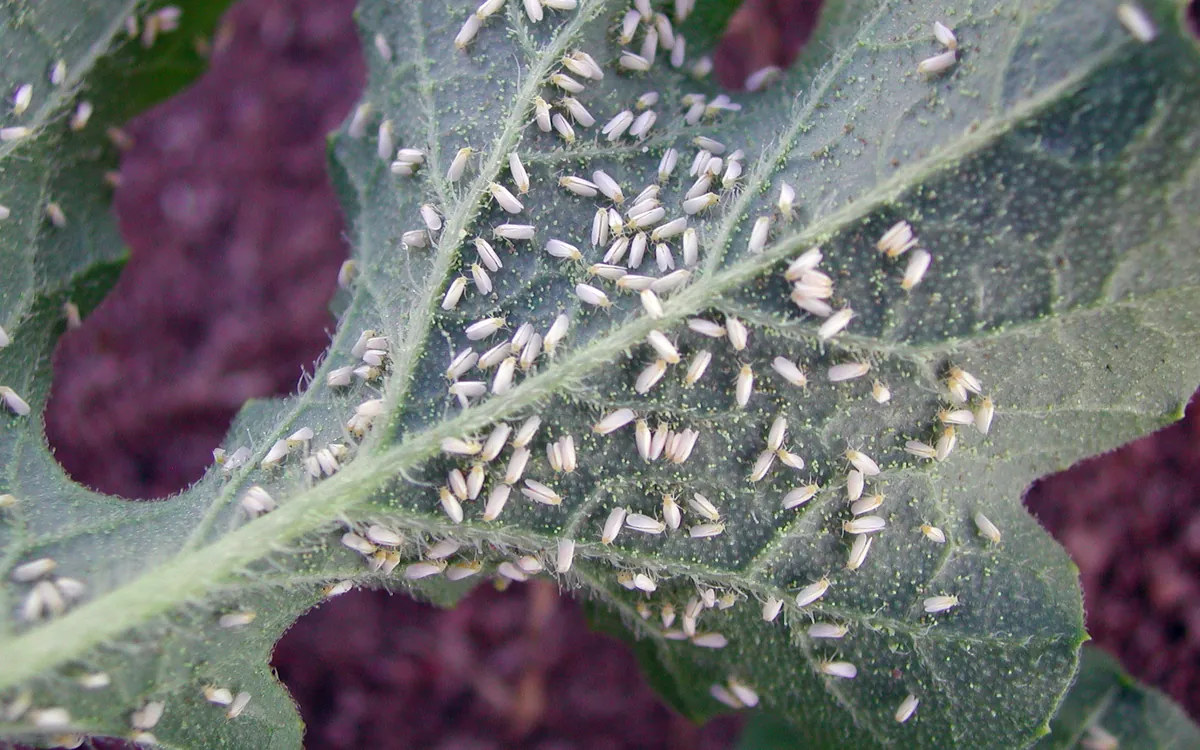
Tiny sap-sucking insects that erupt off the leaf in a white cloud when you brush the plant. Despite the name they are not flies at all - they are Hemiptera, relatives of aphids, scales and mealybugs, and the name comes from the mealy white wax coating the adult's wings and body. They pierce the phloem and drain sap, so heavy populations yellow the leaves, dry them, and drop them. The bigger nuisance is honeydew: a sticky sugary excretion that coats the foliage, grows black sooty mold, and draws ants, which then chase off the natural enemies that would otherwise keep whitefly in check. UC IPM notes outbreaks often begin exactly that way - when biological control gets disrupted - and that once populations are high the pest is genuinely hard to manage. Bemisia nymphs go further, causing distortion, discoloration, and the leaf silvering that gives silverleaf whitefly its name. Both species vector plant viruses. Indoors and under cover they are far worse than in the open garden, because it never gets cold enough to knock them back and their generation time collapses to about 18 days at 80-90°F. The single highest-value habit is inspecting every new plant, undersides included, before it enters the greenhouse or the garden.
Triggers: UC IPM: whiteflies become abundant in vegetable and ornamental plantings especially during warm weather, and outbreaks often occur when natural biological control is disrupted. Greenhouse whitefly develops egg to adult in as little as 18 days, with fastest development between 80 and 90°F, so populations compound quickly under cover or on overwintered indoor plants. They favor succulent, actively growing tissue. Host range is broad - UC IPM lists alfalfa, beans, cucumbers, eggplants, grapes, lettuce, melons, peas, peppers, potatoes, strawberries, tomatoes and many ornamentals. Ants tending the honeydew interfere with the natural enemies that would otherwise suppress them.
Risk fades when: UC IPM: abundant especially during warm weather. Development is fastest at 80-90°F, so protected culture and indoor overwintering sustain populations outside the normal outdoor season - which is exactly when houseplants and tender herbs brought inside get hit.
Silverleaf whitefly (Bemisia tabaci) adults and nymphs on a leaf underside (cropped, resized, converted to WebP) — Photo:
CSIRO
·
CC BY 3.0
Wind flopWind-flop is what happens when storms knock down plants that were standing fine. Different from regular flopping (which is gradual under the plant's own weight) — wind-flop is sudden and often dramatic.
Moderate
Physiological
Jun–SepPeak window months: Jun, Jul, Aug, Sep.
Wind-flop is what happens when storms knock down plants that were standing fine. Different from regular flopping (which is gradual under the plant's own weight) — wind-flop is sudden and often dramatic. Corn after a thunderstorm, Brussels sprouts after a windy week, sunflower heads bent over from a single gust. Plants with shallow root systems (recent transplants, plants in containers) and tall plants with weak base stems are most vulnerable. Plants partially lodged (leaning but not broken) often recover if the soil is firmed back around their base. Plants snapped at the stem are usually a loss. Prevention: stake tall plants from the start, hill up around corn and tall brassicas as they grow, plant windbreak rows of taller plants to break gusts, choose dwarf or short-stem varieties for windy locations.
Triggers: Sudden wind events overwhelm structural support. Saturated soil after rain compounds risk because root anchoring is weaker. Tall corn, Brussels sprouts, sunflowers most commonly affected.
Risk fades when: Re-stake leaning plants by gently lifting and firming soil. Plants with snapped stems below the lowest leaf node are a loss.
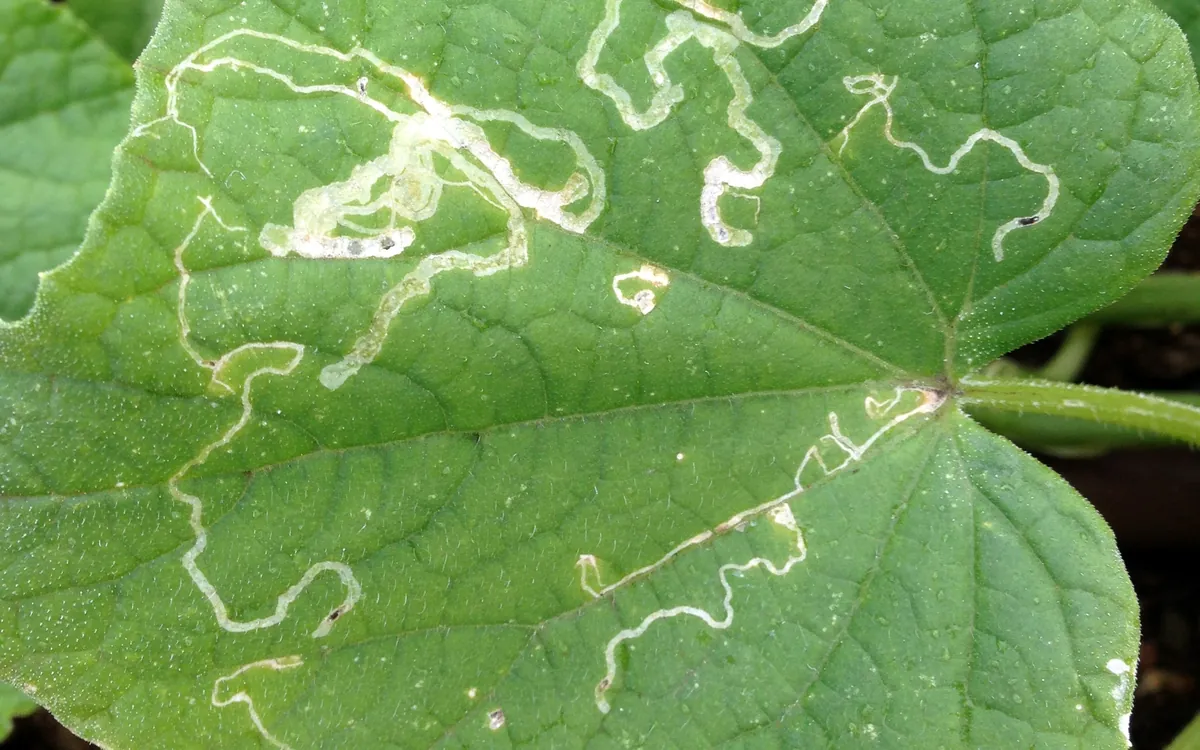
Leafminers are tiny fly larvae that feed between the upper and lower surfaces of leaves, creating winding pale tunnels or blotchy patches. They rarely kill plants but can ruin the marketability of leafy greens grown for foliage. Allium leafminer is an emerging pest in the eastern US (first detected in Pennsylvania in 2017) that damages onions, garlic, leeks, and chives.
Triggers: Liriomyza trifolii: 1 generation in ~1 month at typical greenhouse temps, 14 days at 95°F, 64 days at 59°F (UC IPM). Adults active mid-day. Allium leafminer emerges late March-early April, second flight September-October. Broad-spectrum insecticides trigger outbreaks by killing parasitoids.
Risk fades when: Parasitic wasps usually bring populations down as the season progresses unless broad-spectrum sprays disrupt them; damage peaks in warm spring and summer flushes and eases in cooler weather, so risk fades with natural-enemy buildup and falling temperatures (USU Extension, PNW Pest Handbook, UC IPM).
Leafminer serpentine mines on a cucurbit leaf — Photo:
Scot Nelson
·
CC0 1.0
Self seedingSelf-seeding (or volunteer reseeding) happens when a plant is allowed to flower, set seed, and drop those seeds in the garden.
Low
Physiological
Jul–OctPeak window months: Jul, Aug, Sep, Oct.
Self-seeding (or volunteer reseeding) happens when a plant is allowed to flower, set seed, and drop those seeds in the garden. Many cool-season crops like cilantro, dill, fennel, arugula, lettuce, and many flowers (calendula, cosmos, sunflower, poppy, nigella) reseed reliably year after year — often more reliably than deliberate sowing. Hybrid varieties typically don't reseed true-to-type — the seedlings may show traits of the parent lines rather than the labeled hybrid. Open-pollinated and heirloom varieties reseed faithfully. If you don't want volunteers, remove flower heads before seed sets. If you want them, leave seed heads on through fall and they'll sprout when conditions are right next season.
Triggers: Self-seeding follows any time a plant flowers, sets seed, and is left in place long enough for seed to mature and drop. Open-pollinated varieties reseed true; hybrid varieties may not.
Risk fades when: Self-seeding isn't a problem per se — it's the plant doing what plants do. Manage by deciding whether you want volunteers next season.
7 more issues below · Show all 17 ↓
Feeding & picking
Nutrition & Harvest
How hungry the plant is, what ripe harvest looks like, and how long the crop keeps after picking.
Feeding
Nutrition
Feeding intensityLight feeder
Timing
Harvest
Harvest blooms when fully open, dry, and free of spray residue.
Expected yield0.25–1 lbs/plant
Storage5 days — Refrigerate gently in a lined container and use quickly.
Stay in the loop
Planting reminders for Anise Hyssop
Frost warnings, zone-specific timing, and seasonal nudges -- sent only when there's something to act on. Free, unsubscribe anytime.
Get Personalized Planting Reminders
Frost alerts, zone-specific tips, and seasonal guidance. Free, unsubscribe anytime.
What you'll need
Growing Supplies
Hand-picked for your Anise Hyssop, with the extension research behind every recommendation.
Mulch / landscape fabric
Nearly every garden benefits from mulch for weed suppression, moisture conservation, and soil temperature moderation. For most home gardeners, quality organic mulch is the better buy over landscape fabric.
Source: Penn State Extension; Wisconsin Horticulture; Illinois Extension
Every gardener benefits from putting water at the root zone instead of on the leaves, because drip and soaker systems reduce foliar disease pressure by limiting leaf wetness and soil splash. A quality kit should include a backflow preventer, filter, pressure reducer, and UV-resistant tubing.
Source: Iowa State University Extension; Colorado State University Extension; UMass Extension
Row cover adds frost protection, speeds early growth, and physically excludes insect pests without spraying. Look for spun-bonded fabric with a stated weight and frost rating, UV resistance, and enough width for hoops or low tunnels.
Source: University of Maryland Extension; University of New Hampshire Extension; Colorado State University Extension
K-State Research and Extension and University of Maryland Extension recommend shade cloth as a heat-management tool for vegetable gardens, with 30 percent shade rating most effective for tomatoes, peppers, and fruiting crops, and 40 to 50 percent for protecting heat-sensitive greens during hot summer months. University of Delaware research found 30 percent black shade cloth tripled marketable yield for bell peppers compared to unshaded plants, and Purdue trials showed shade cloth reduced maximum daily temperatures by 8 to 10 degrees Fahrenheit. Choose knitted polyethylene with reinforced grommets every 18 to 24 inches, mount on hoops or a frame with open sides for airflow, and remove or vent during prolonged wet weather to avoid increased humidity in the canopy.
Source: K-State Research and Extension; University of Maryland Extension; University of Delaware Cooperative Extension; Purdue University Extension
Reflective plastic mulch (white-on-black or silver)
North Carolina State Extension reports that white-on-black plastic mulch can reduce soil temperature by 5 to 20 degrees Fahrenheit and silver mulch by about 6 degrees, the opposite effect of black mulch which warms soil. This makes reflective mulch the appropriate plasticulture choice for hot zones (especially Zone 9a desert and other high-heat low-humidity areas) where overheating limits warm-season crop performance more than cold soil. Silver mulch adds documented aphid and thrips repellency from the reflective surface. Use only with drip irrigation installed underneath, never use plastic mulch without irrigation, and reserve for late spring or early fall plantings where the surrounding heat is the primary stress.
Source: North Carolina State Extension; University of Arizona Cooperative Extension
A soil test gives a baseline for pH and nutrient status so gardeners can add only what the soil actually needs. Prioritize a mail-in or lab-affiliated kit whenever possible because extension guidance notes that laboratory testing is more accurate than instant readers.
Source: University of Maryland Extension; Purdue Extension; Montana State University Extension
University of Minnesota Extension recommends measuring soil temperature 2 to 4 inches below the surface to decide when warm-season crops can actually be planted, because air temperature and average frost dates do not reliably predict whether soil is warm enough for germination. A dedicated soil thermometer with a 4 to 6 inch stainless steel probe gives gardeners a deterministic reading instead of relying on the calendar alone, which matters most in zones with wide last-frost variability. Look for a waterproof stainless steel stem, a clearly marked vegetable-garden temperature range, and a readable analog or digital display at planting depth.
University of Arizona Cooperative Extension notes that most vegetables root in the top 12 to 24 inches of soil and that hot, dry periods require more frequent irrigation, but watering by habit often wets only the top inch while leaving the root zone dry. A dedicated soil moisture meter with a long probe gives gardeners a deterministic reading at root depth instead of guessing from surface appearance, which is most critical in low-rainfall desert zones (Zone 9a Phoenix) and in raised beds or containers that dry from the top down. Look for a single-purpose moisture meter (not a 3-in-1 or 4-in-1 combo, which trade accuracy for feature count) with a probe that reaches 8 to 12 inches and a clear analog or digital display.
Source: University of Arizona Cooperative Extension
UF/IFAS Extension and Texas A&M AgriLife Extension recommend securing or removing trellises, shade cloth, hoop covers, container plants, and lightweight raised-bed accessories before tropical storms and hurricanes, since loose garden items become projectiles in high winds. Most-relevant for Gulf Coast Zone 8b (Houston, Mobile, New Orleans), Florida Zone 9b (Miami, Tampa), and any coastal area within the Atlantic and Gulf hurricane corridors. Galvanized steel ground anchors resist rust in humid coastal soils, and screw-in spiral anchors hold significantly better than driven stakes in saturated soil during storm conditions. Use quick-release fasteners on shade cloth and trellises so they can be removed quickly when a storm watch is issued.
Extension guidance favors bypass designs because they make cleaner, closer cuts on living tissue than anvil types. Look for hardened steel blades that can be sharpened, a comfortable grip, and a cutting capacity matched to real home-garden stems.
Source: University of New Hampshire Extension; Iowa State University Extension; Purdue University Extension
Raised beds improve drainage, let gardeners control soil from day one, reduce compaction, and make gardening more accessible. A quality kit should use rot-resistant, food-safe materials and provide enough depth for productive rooting.
Source: Penn State Extension; University of Delaware Cooperative Extension; Illinois Extension
The most useful mix is three categories: a beginner guide, a reference manual for diagnosis and crop-by-crop lookup, and a soil science book. Look for region-aware editions, strong visuals, and evidence-based authorship.
As an Amazon Associate I earn from qualifying purchases. These are Amazon affiliate links -- if you buy through them, SoilStack earns a small commission at no extra cost to you. It's how we keep the app free and the calendar ad-free. We only link products that match what the research says you actually need.
Research
Sources
Reference material and extension guidance used to build this growing guide.